Lil membrane whistle
Stanford, music + design
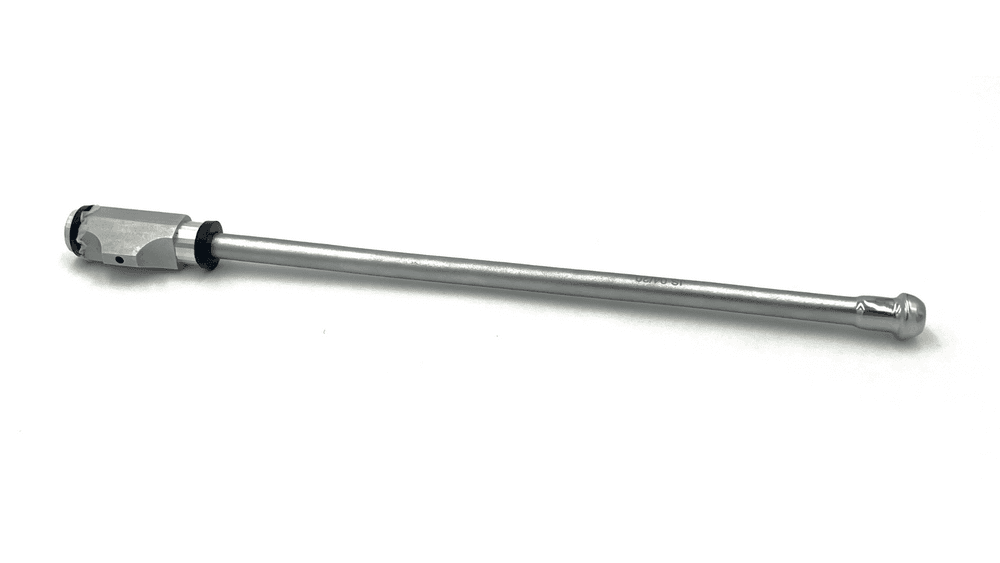
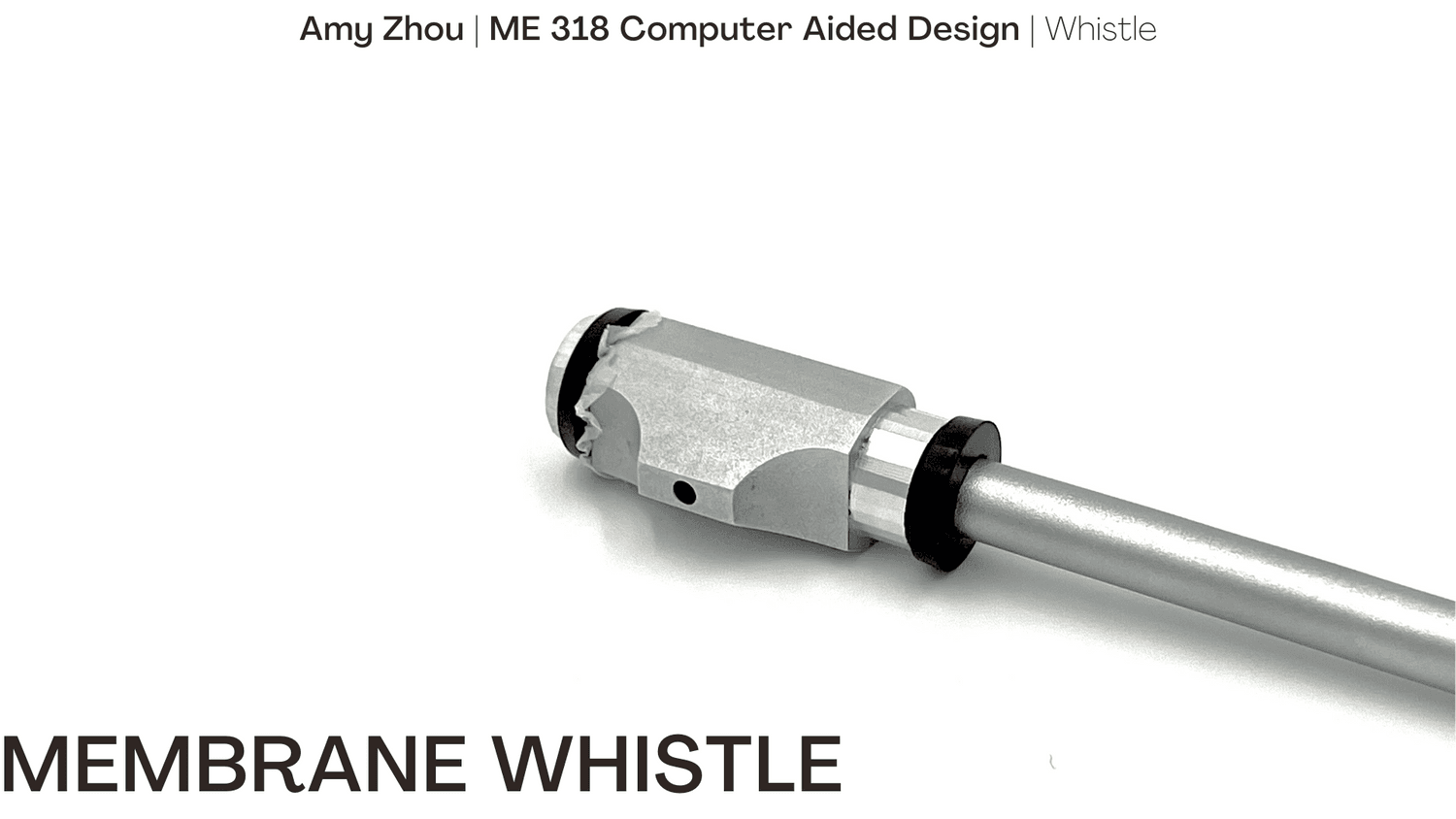
A small membrane-driven whistle exploring how a tensioned vibrating film changes the timbre of a simple aerophone. Built for the same Stanford music + product design class as the harp.
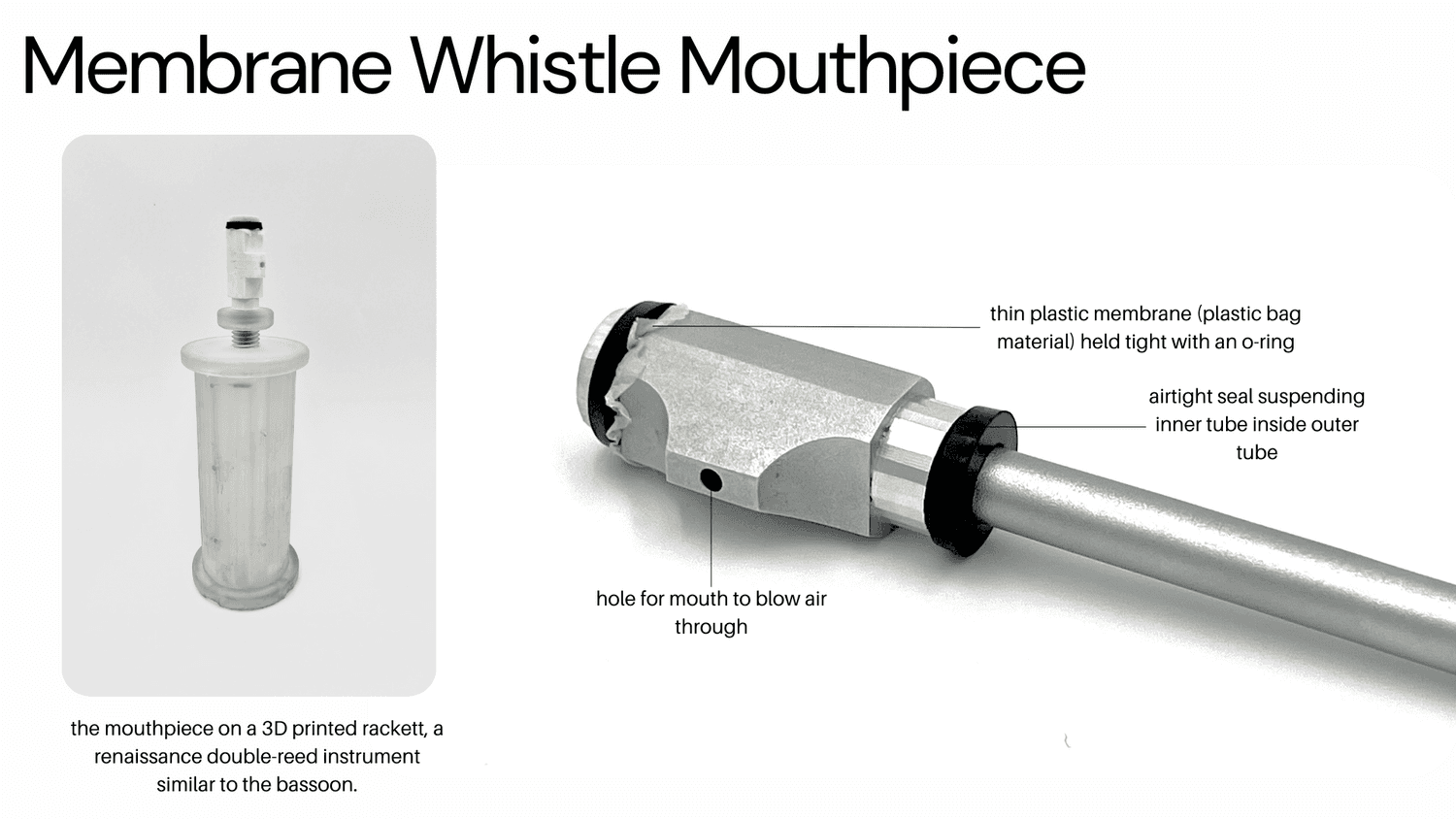
A standard whistle uses a fipple: a fixed edge that splits an air stream and produces a tone at a frequency set by the resonant length of the tube. A membrane whistle replaces (or augments) the fipple with a stretched film. The airflow drives the membrane, the membrane modulates the airflow, and the result is a tone colored by the membrane's own modal frequencies.
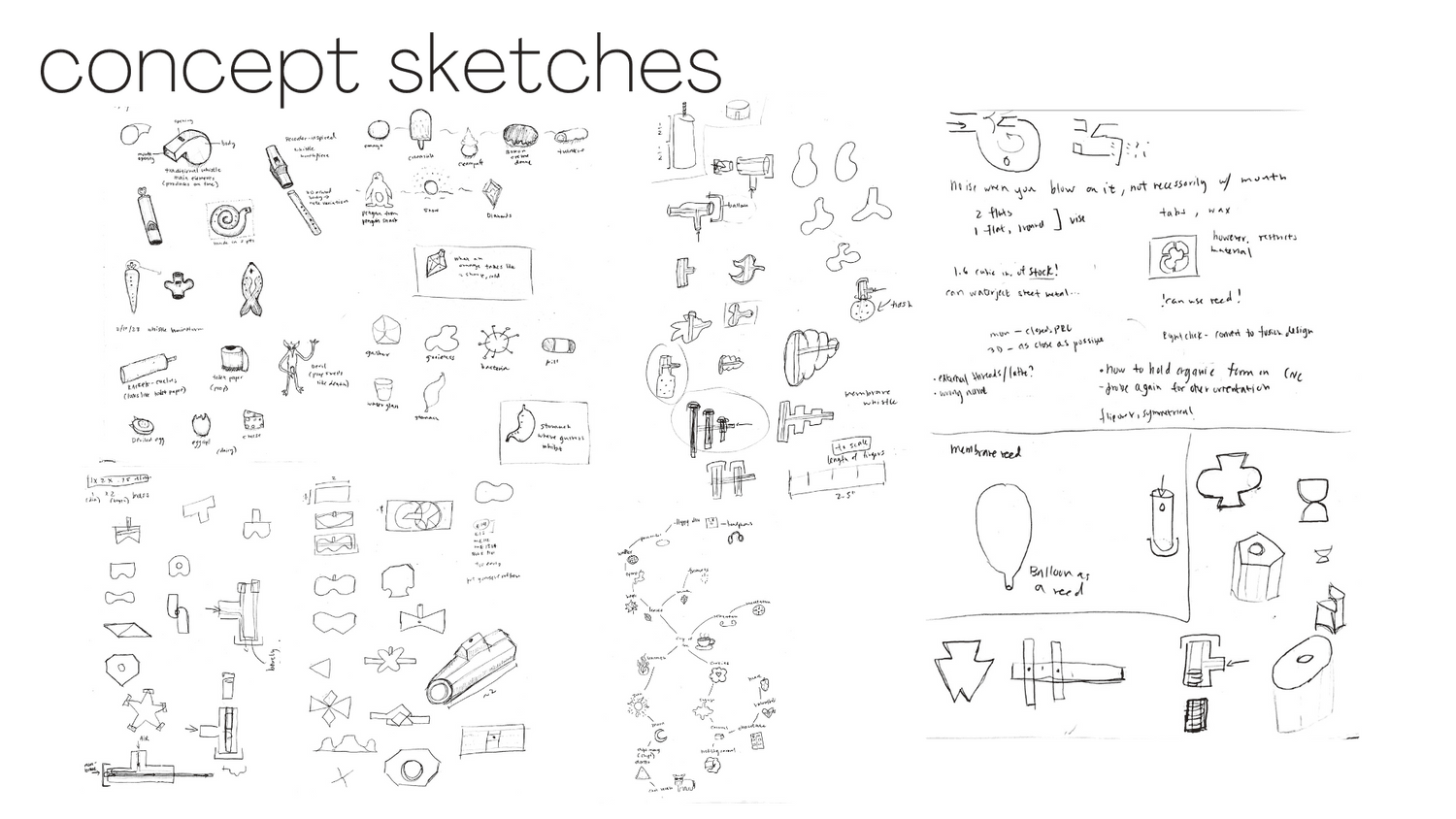
The acoustics live in the coupling between three subsystems: the breath channel that delivers a stable laminar jet, the tube length that sets the fundamental, and the membrane whose tension determines its mode shapes. Designing the instrument was iterating on those three until the membrane mode reinforced rather than fought the tube mode. The character ends up somewhere between a kazoo and a flute: breathier than a whistle, more pitched than a kazoo.
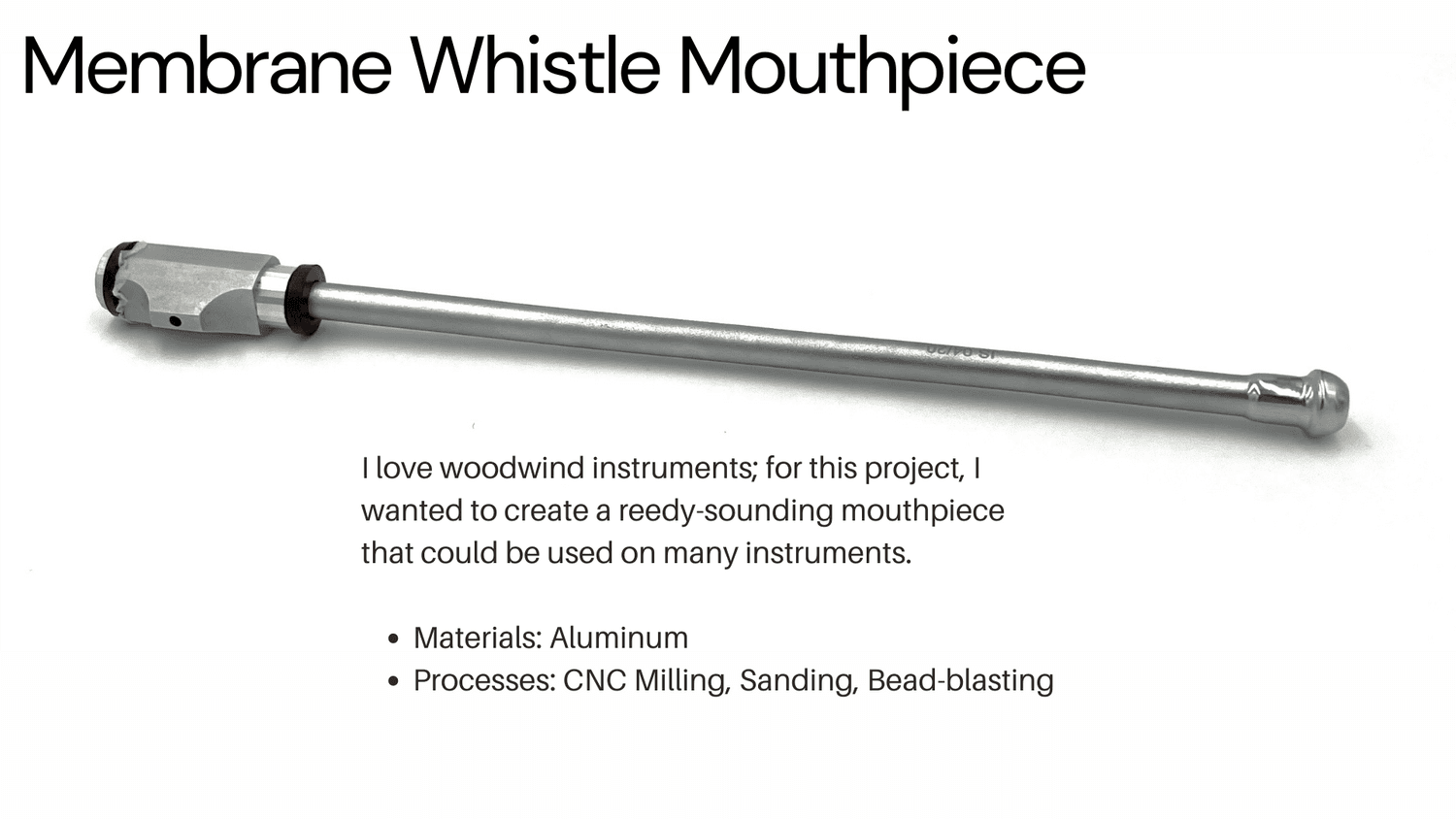
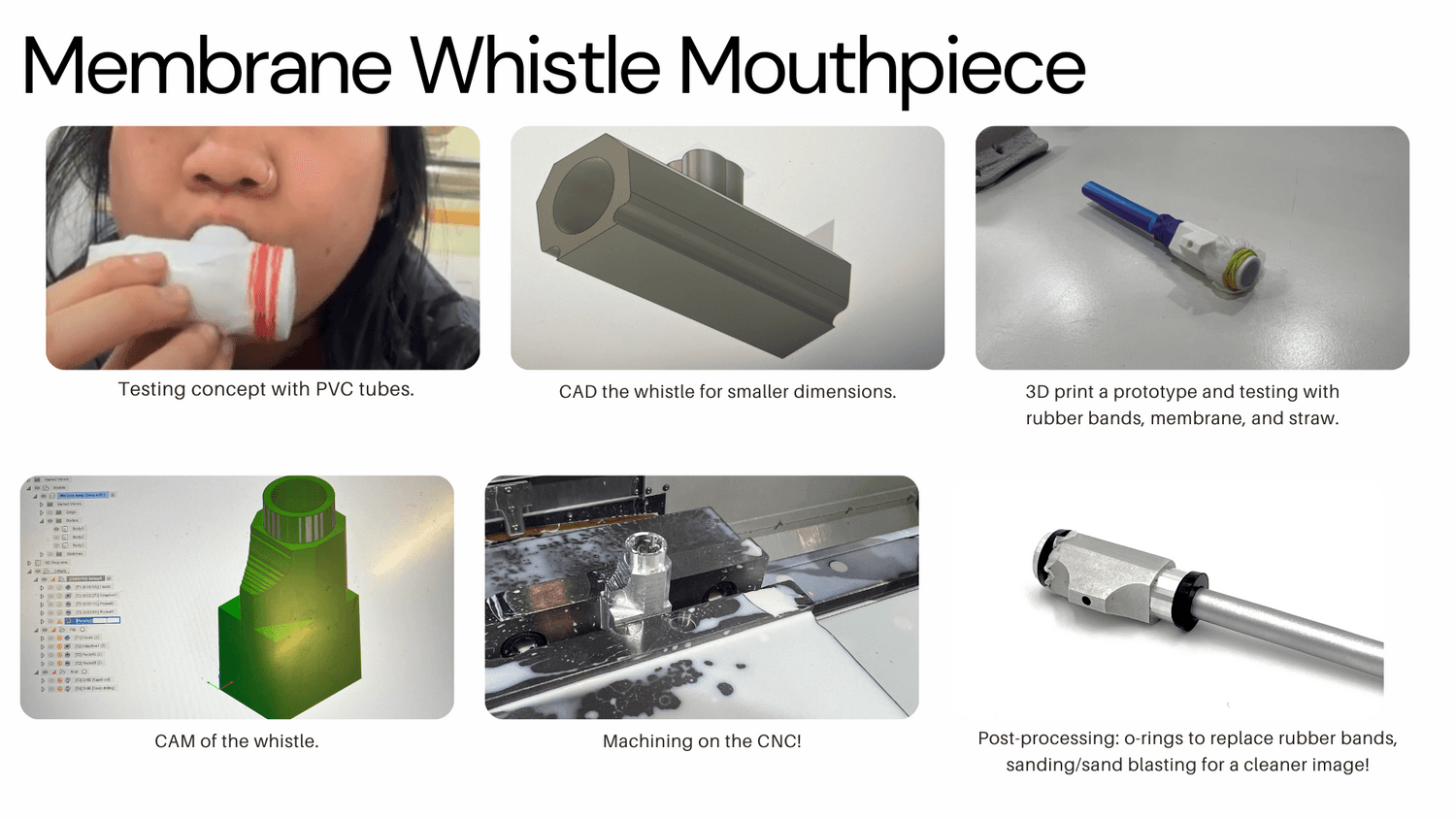
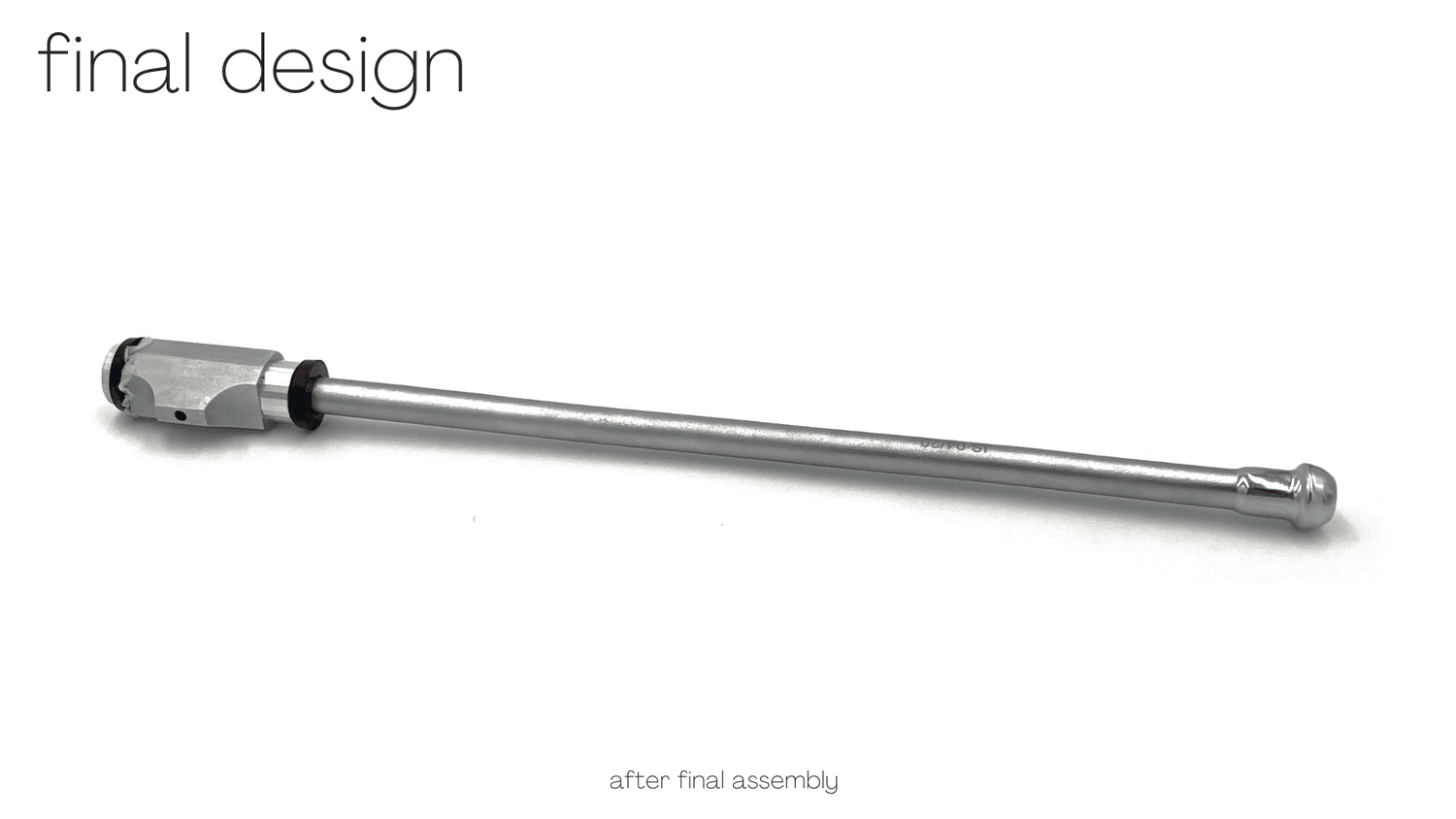
The body is a turned aluminum tube; the membrane is a thin polymer film stretched across one end. Most of the design work was iterating on membrane tension, breath-channel geometry, and the small slots that direct airflow over the membrane edge. Recording linked below.