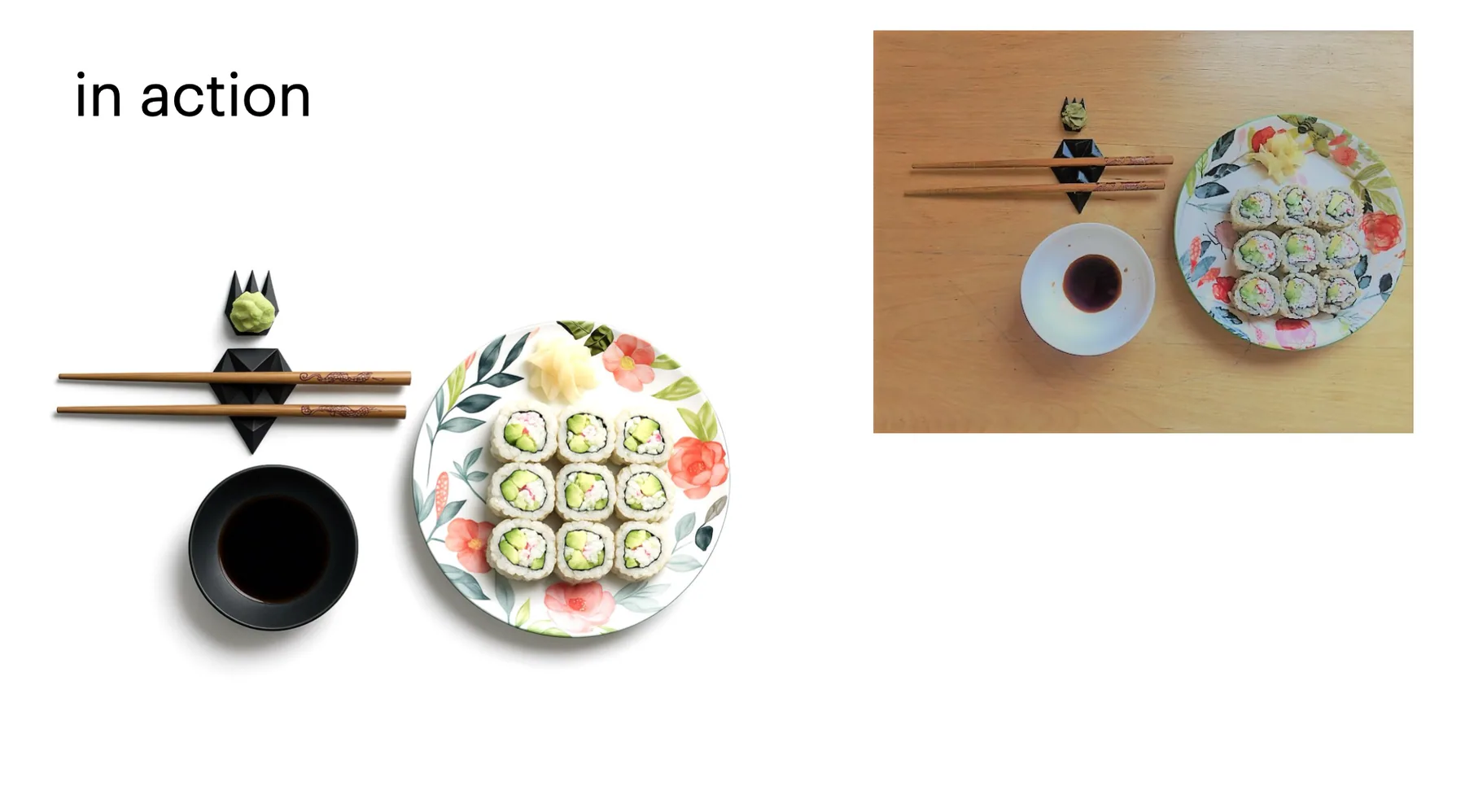
Sushi-eating accessory
Personal project
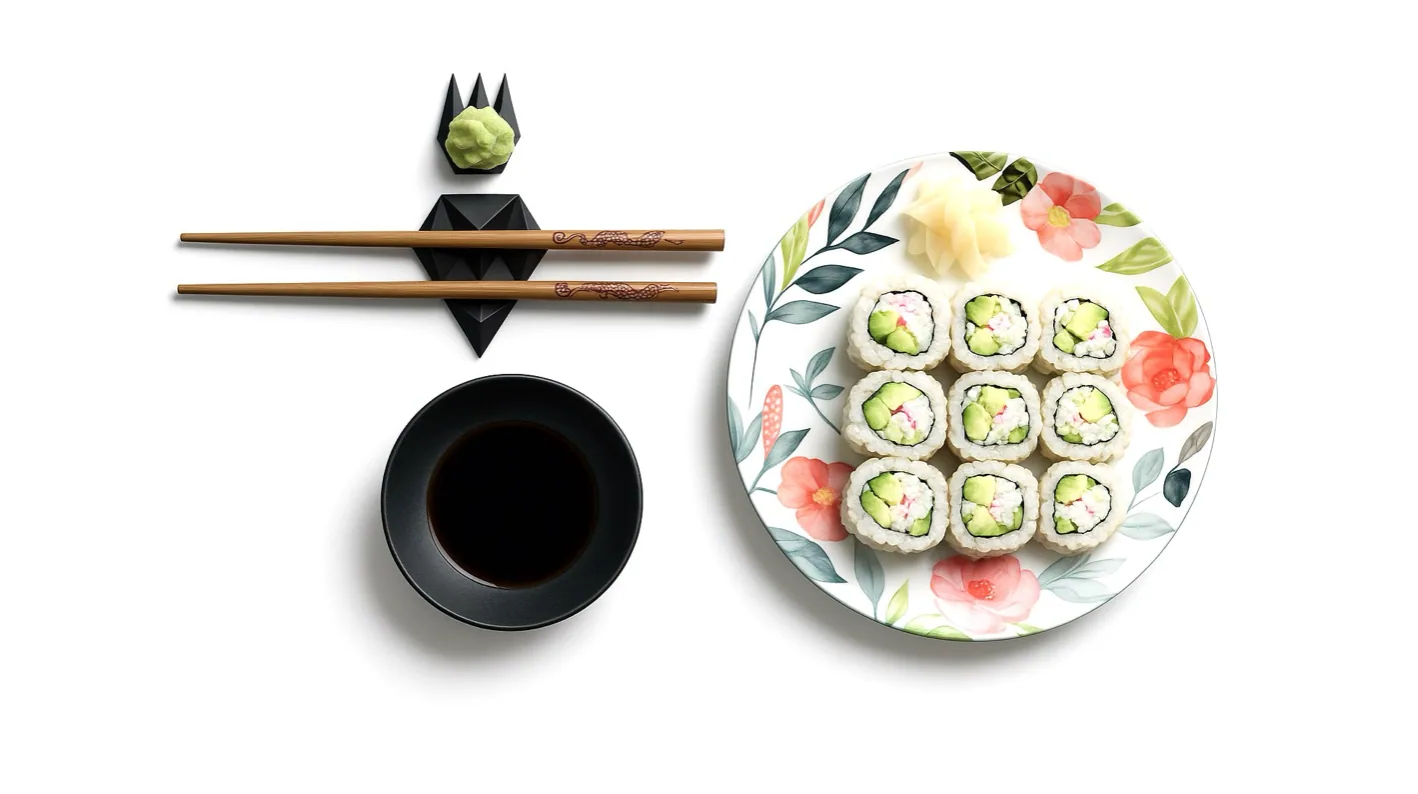
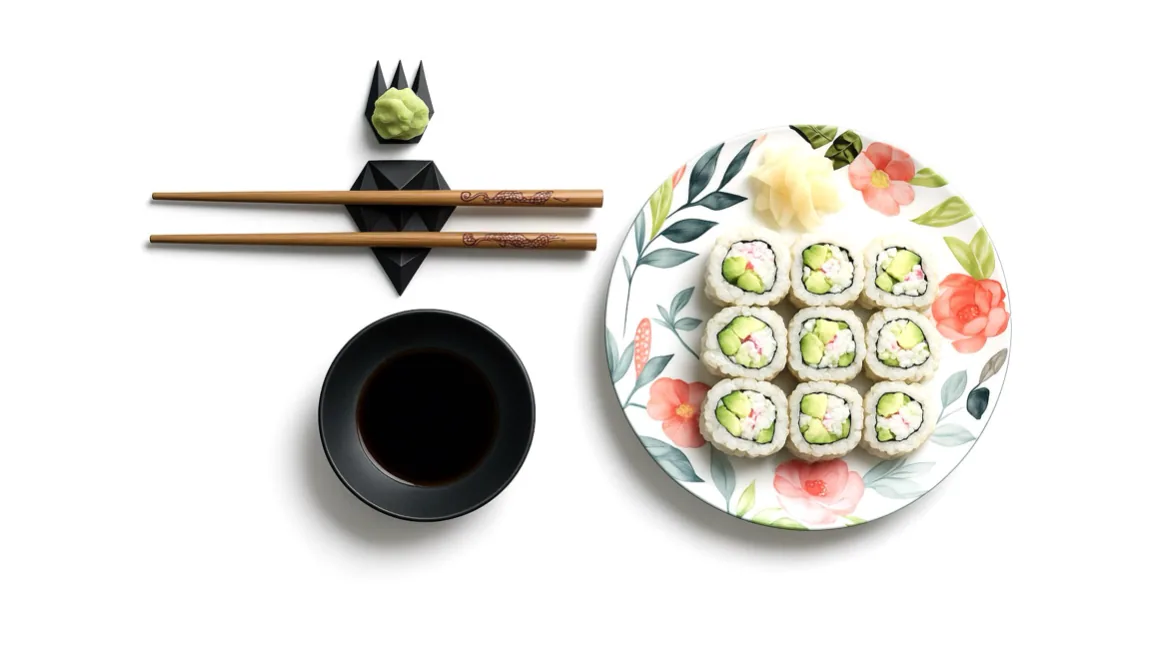
A small accessory designed to make eating sushi a little easier and a little more delightful. The first image is a watercolor study, a way to imagine the experience of using the object before deciding what the object should be.
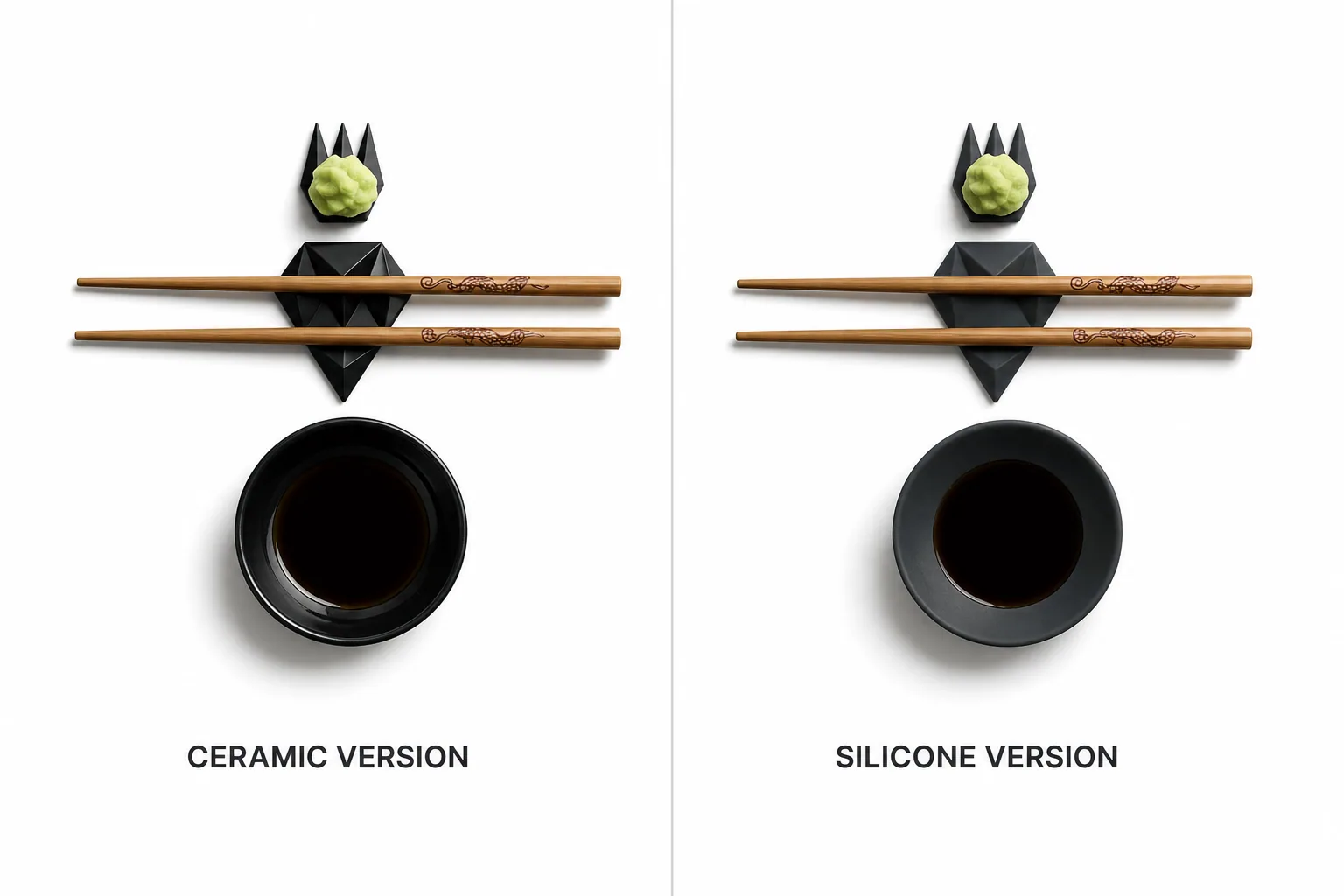
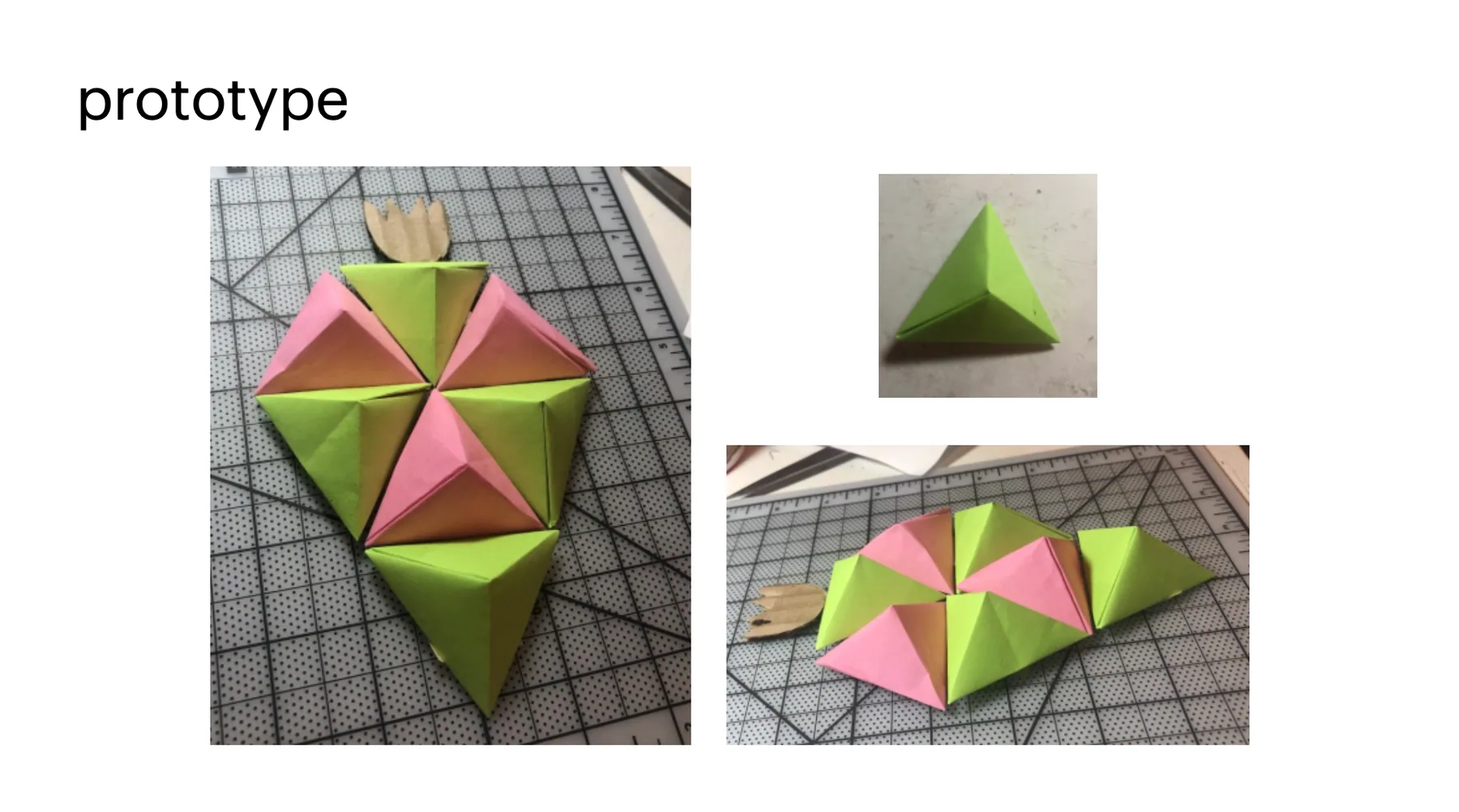
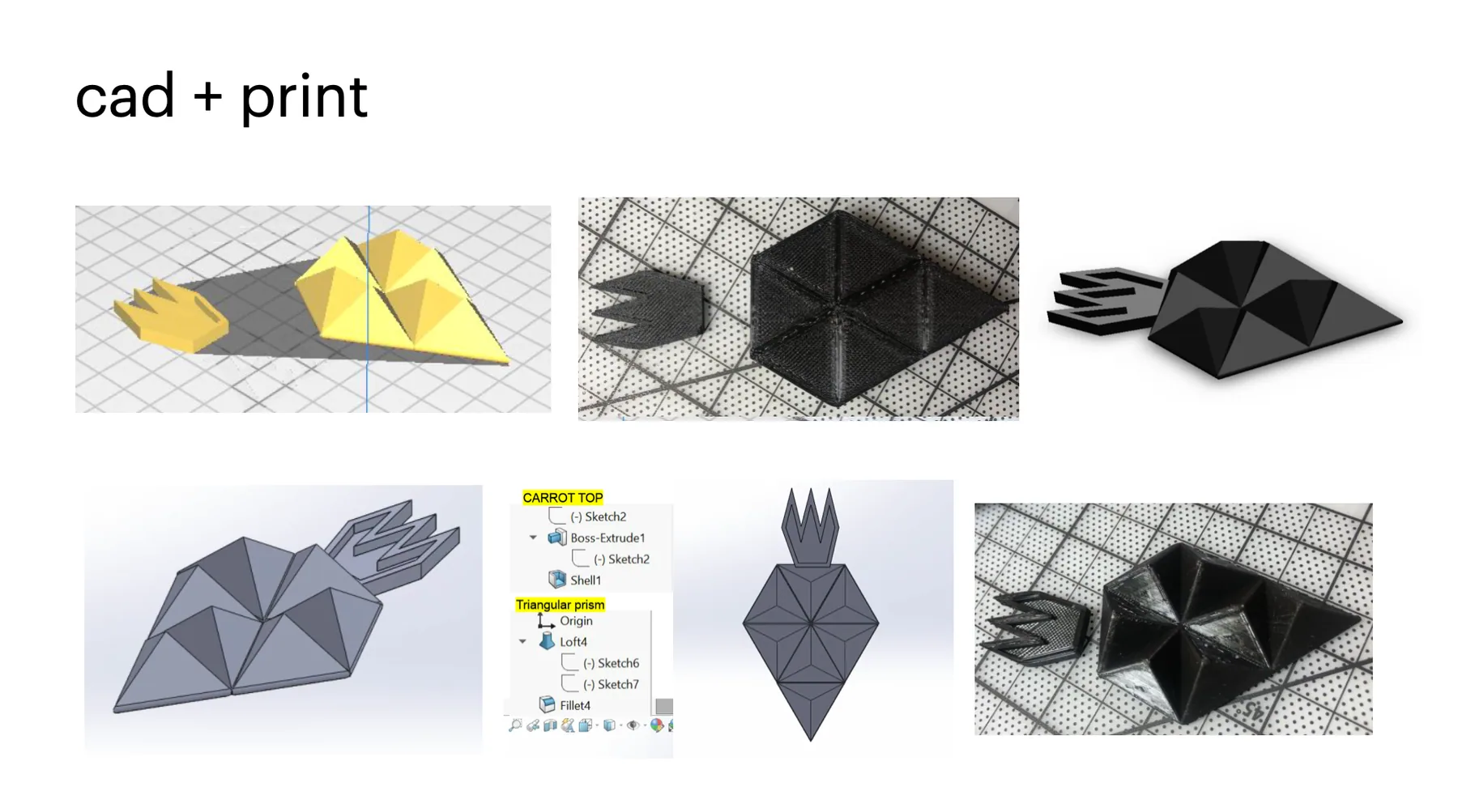
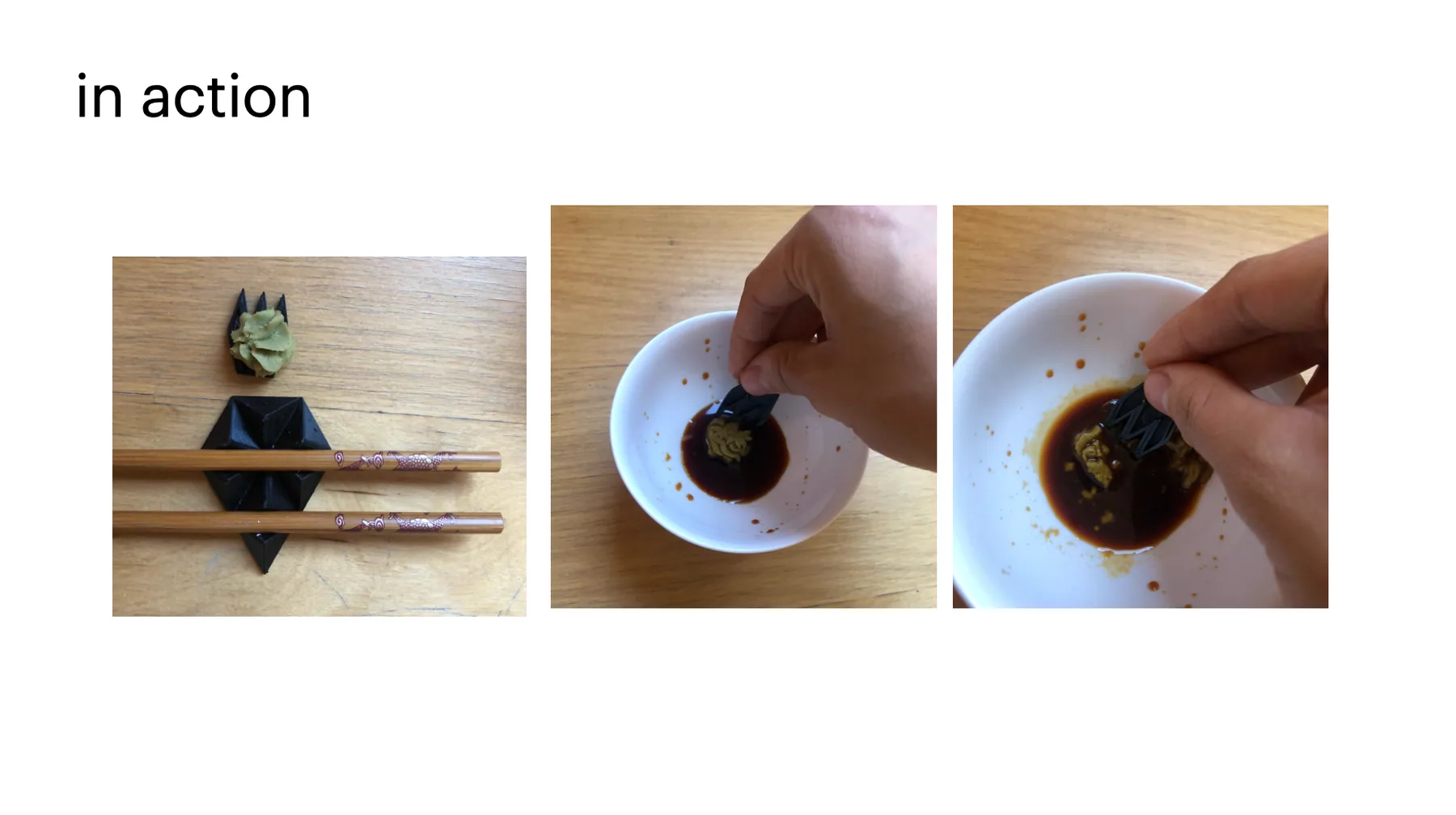
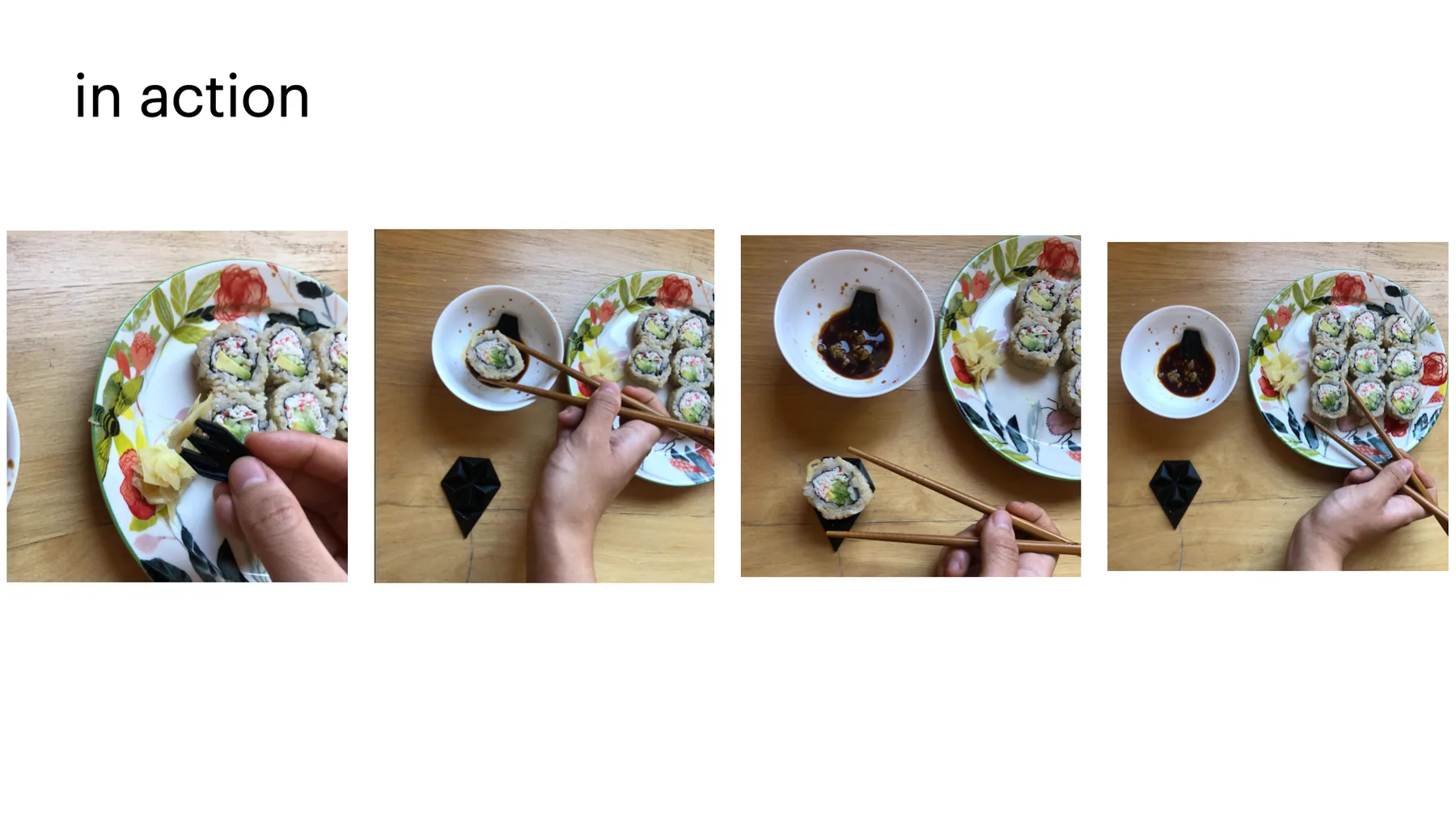
The form combined a few small jobs that usually need three or four separate dishes: a place to rest chopsticks, a small well for soy sauce, and a low rim that doubles as a serving plate. Designing for a familiar ritual is a particular kind of constraint, anything you add has to disappear into the meal rather than call attention to itself.
The studies explored ceramic and silicone variants. Ceramic gave the object weight and presence on the table but was unforgiving in production: a single shrinkage crack in the kiln and a piece is gone. Food-grade silicone is more forgiving in process and warmer in the hand, but it doesn't carry the same aesthetic weight. Each material set its own constraints on form (draft on undercuts for the silicone molds, wall thickness and cure schedule for the ceramic), and the studies converged on shapes that worked in both.